


The Storied Career Of Clinical Physicist Dr. Charlie Ma: From Philadelphia To Cancer Centers Worldwide

Over more than two decades at Fox Chase Cancer Center, Chang Ming Charlie Ma, PhD, FAAPM, FASTRO, Professor, Director of Physics, and Vice Chair of Radiation Oncology, helped transform clinical physics from a behind-the-scenes discipline into a force that reshaped how radiation therapy is planned, calculated, and delivered. Working with physicians, physicists, trainees, and research collaborators, he helped build a program whose influence reached far beyond Philadelphia.
As he approaches retirement in 2026, Ma reflected: “The promise of modern radiotherapy is that now we can shape it around the patient’s real anatomy and the biology of the disease, on a day-to-day basis with ever-more precision. ”
Building A Clinical Physics Powerhouse
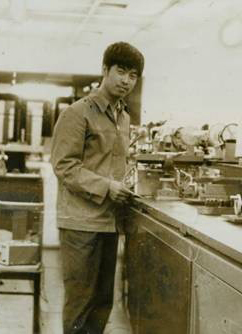
Dr. Ma, in his early work as a clinical physicist
Recruited to Fox Chase in 2001, Ma was charged with building a nationally recognized academic and clinical physics center, drawing on prior research at Stanford University School of Medicine and the National Research Council of Canada in Ottawa.
A strong believer in collaboration and knowledge sharing, Ma helped advance techniques that became global standards for 3D conformal radiation therapy, intensity-modulated radiation therapy (IMRT), and image-guided radiation therapy (IGRT). These approaches improved how patients are imaged, planned, positioned, and treated.
“We developed the first CT and MRI simulators for treatment planning, allowing clinicians to better understand patient geometry, tissue density, and tumor location before treatment. We were also home to early BAT ultrasound, CT-on-rails and Calypso electromagnetic transponders, establishing Fox Chase as a pioneer in image-guided radiotherapy,” said Ma.
From Hours to Seconds
Another series of ‘firsts’ for Ma’s team were in the realm of Monte Carlo dose calculations. Ma, his research colleagues and trainees, developed groundbreaking Monte Carlo dose calculation methods for robotic stereotactic radiosurgery and stereotactic body radiation therapy, including approaches used by CyberKnife treatment-planning systems worldwide. Ma said, “What once seemed computationally impossible has become part of daily clinical care, enabling us to treat patients in ways we could only previously imagine. Calculations that used to take hours can now be done in minutes or seconds—and that changes what is possible for patients.”
Making Adaptive Therapy A Clinical Standard

The Department of Radiation Oncology at
Fox Chase Cancer Center
In the early 2020s, Ma and other Fox Chase leaders worked with Eric Horwitz, MD, FABS, FASTRO, Chair of the Department of Radiation Oncology at Fox Chase and the Lewis Katz School of Medicine at Temple University. At the helm, Horwitz and peers moved adaptive radiation therapy into the mainstream demonstrating clinical advantages for treating prostate, bladder, liver, pancreas, breast, lung, and head and neck cancers. Horwitz said, “We have built Fox Chase into a national and regional leader, offering a robust clinical care program, innovative clinical trials, and treatment for more than 1,000 patients with this therapy.”
Opening new treatment frontiers
Ma’s department also became an early clinical investigator of advanced cancer treatment modalities, including MRI-guided high-intensity focused ultrasound (MRgHIFU), modulated electron radiation therapy (MERT), pulsed low-dose-rate radiation therapy (PLDR), and radiodynamic therapy (RDT). In each case, the goal was the same: move promising physics concepts into clinical tools that could expand treatment options for patients with complex diseases.
The dynamic future of radiotherapy
Ma now leads one of Fox Chase’s major research efforts in radiodynamic therapy, a potential local, regional and systemic cancer treatment modality. The approach builds on photodynamic therapy but uses radiation-generated Cherenkov light to activate a sensitizing agent deeper in the body, extending treatment beyond superficial tumors. “Fox Chase was the first institution outside China to house the system and conduct rigorous clinical trials, with early-phase work focused on safety and later studies dependent on results and funding,” explained Ma.
Training the next generation
During his tenure, Dr. Ma developed one of the first CAMPEP-accredited academic medical physics residency programs with three-year integrated research and clinical training. To date, the Physics Department has trained 32 residents and expanded the program’s national visibility through ASTRO and AAPM fellows, numerous abstracts and presentations, and a reputation as high-impact clinical applications.
Today, the Fox Chase clinical physics program remains strong, with 15 PhD physicists, five AAPM fellows, two ASTRO fellows, and three medical physics residents.
As Ma discussed retirement, he emphasized that his legacy is about far more than personal invention or leadership, but about the programs, trainees, collaborations, systems, and protocols he has put in place to create a structure and environment “that continues after you step away.”
“The work must go on, and the next generation must have the tools and confidence to address the burdens of cancer as far as is humanly possible,” Ma concludes.
From Philadelphia to Cancer Centers Worldwide
- Set global standards for 3DCRT, IMRT, and IGRT.
- Pioneered CT and MRI simulators for treatment planning.
- Adopted early BAT ultrasound, CT-on-rails, and Calypso Beacons.
- Developed Monte Carlo dose calculation methods for SRS/SBRT.
- Led national development of CT-based ART as a clinical standard.
- Opened treatment frontiers with MRgHIFU, MERT, PLDR, and RDT.
- Championed and developed first RDT trial outside China.